
5min read
Paradox Clue
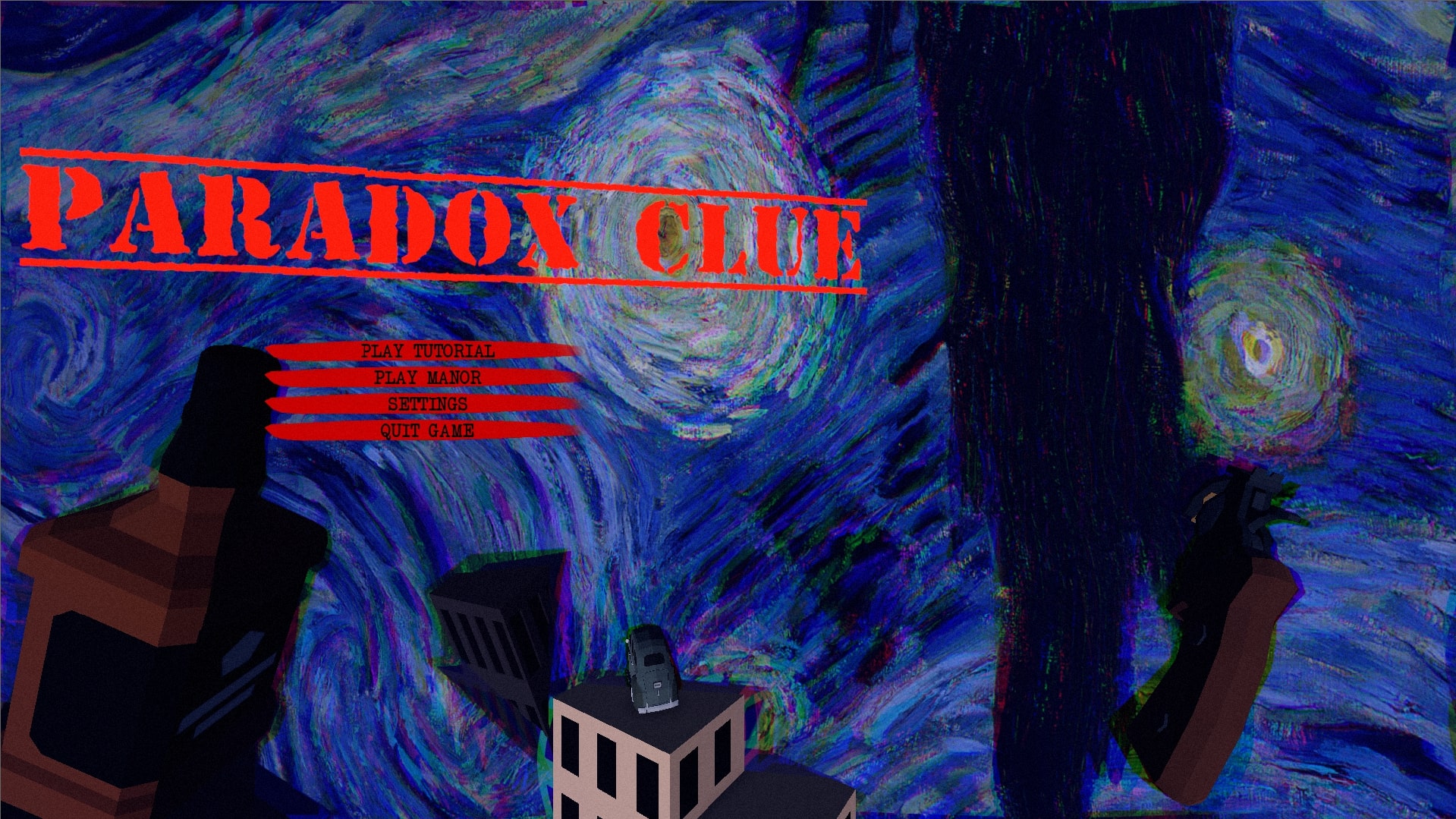
Paradox Clue is a first-person detective puzzle game created by a team of siz as part of a unversity game development course. The player controls both the robber, and the detective investigating the robbery, and can freely switch between the two at any time. The player explores two levels, uncovering clues as the detective, triggering events as the robber, and solving environmental puzzles that link the two. Actions taken by the robber can affect the gameplay of the detective, and vice versa. The goal of the game is to uncover how the crimes have been commited. The core experience focuses on observation, deduction, and cause-and-effect logic interlinked between two timelines.
The design emphasizes non-linear puzzle solving: actions in one loop influence future loops, rooms change state based on prior events, and certain interactions only become available once specific conditions are met. Newer actions may also invalidate earlier actions, as they now become invalid for the current 'hypothesis'. To support this, we needed a robust technical foundation for interactables, conditional game logic, and world-state tracking between timelines.
How It Works
The game is built around a framework that connects the actions of the player to environmental states linked to a specific time in the current timeline. Objects in the environment can be inspected, activated, combined, or unlocked once certain criteria are met. The detective can return back to older hypotheses, reverting decisions made. Changes in hypotheses may also invalidate previous assumptions or events that are deemed impossible under the new hypohtesis. This enables chain-reaction puzzle design, where new narrative or gameplay paths open across timelines as the player experiments with different sequences of actions.
A room-tracking system monitors the player's movement through the manor, detecting both the current room and previously visited rooms. This system drives location-based triggers, such as unlocking new interactions after witnessing events, changes in the locations of witnesses, altering object states across timelines, or revealing new story beats based on where the player has been.
The puzzle framework is data-driven: each interactable defines its own requirements and resulting state changes, allowing designers to build complex puzzle chains without touching code. This made it possible to implement multi-step logic that reacts to loop history, player knowledge, or earlier interactions—reinforcing the time-loop theme.
My Contribution
My work focused on the gameplay systems that connect player actions, environment logic, and the time-loop structure. My contributions are as follows:
Built the core interaction system, supporting conditional and state-based interactables.
Designed and implemented all puzzle logic and systems linking objects, rooms, states, and progression.
Developed the room-tracking system to detect current and past rooms for trigger-based logic.
Created and modelled in-game assets, and contributed heavily to environmental set dressing.
Performed bug fixing, refactoring, and code reviews to maintain code quality across the team.
Participated actively in gameplay and systems design, shaping puzzle flow, loop logic, and usability.
Results & Takeaways
The game successfully delivered a cohesive time-loop detective experience supported by flexible, reusable systems. The interaction and puzzle foundations proved highly adaptable, allowing fast iteration during development. The user experience of the game was percieved as very pleasant and enjoyable, with many players that were excited to play. Some main key takeways are:
Systemic Puzzle Framework: Enabled conditional, state-driven, multi-step puzzles aligned with a time-loop structure.
Design-Friendly Tools: Clear separation of logic and content allowed rapid iteration during playtesting.
Production-Ready Practices: Code reviews, refactoring, and modular architecture improved maintainability and teamwork.
This project strengthened my skills in systemic gameplay design, interaction frameworks, clean architecture for puzzle logic, and working closely with teammates with other roles to build cohesive player experiences.
See More
A playable version of the game can be found on this Itch.io page.